Yes, you can live at home during some renovations.
But whether you actually should depends on far more than how much dust or noise you are willing to tolerate.
The real questions are:
Will you retain a functioning kitchen or bathroom?
Can the building area be properly separated?
How often will the water and power be interrupted?
Are children, pets or people working from home involved?
Will remaining in the property slow the work down?
Could asbestos, structural work or concealed damage change the plan?
A contained ensuite or laundry renovation may be manageable while you remain at home.
A kitchen renovation involving flooring, painting and adjoining rooms can be substantially harder. Renovating the only bathroom, undertaking structural work or opening several areas simultaneously may make moving out the sensible decision.
The answer should be established before construction begins—not after the house becomes unlivable.
The Quick Answer by Renovation Type
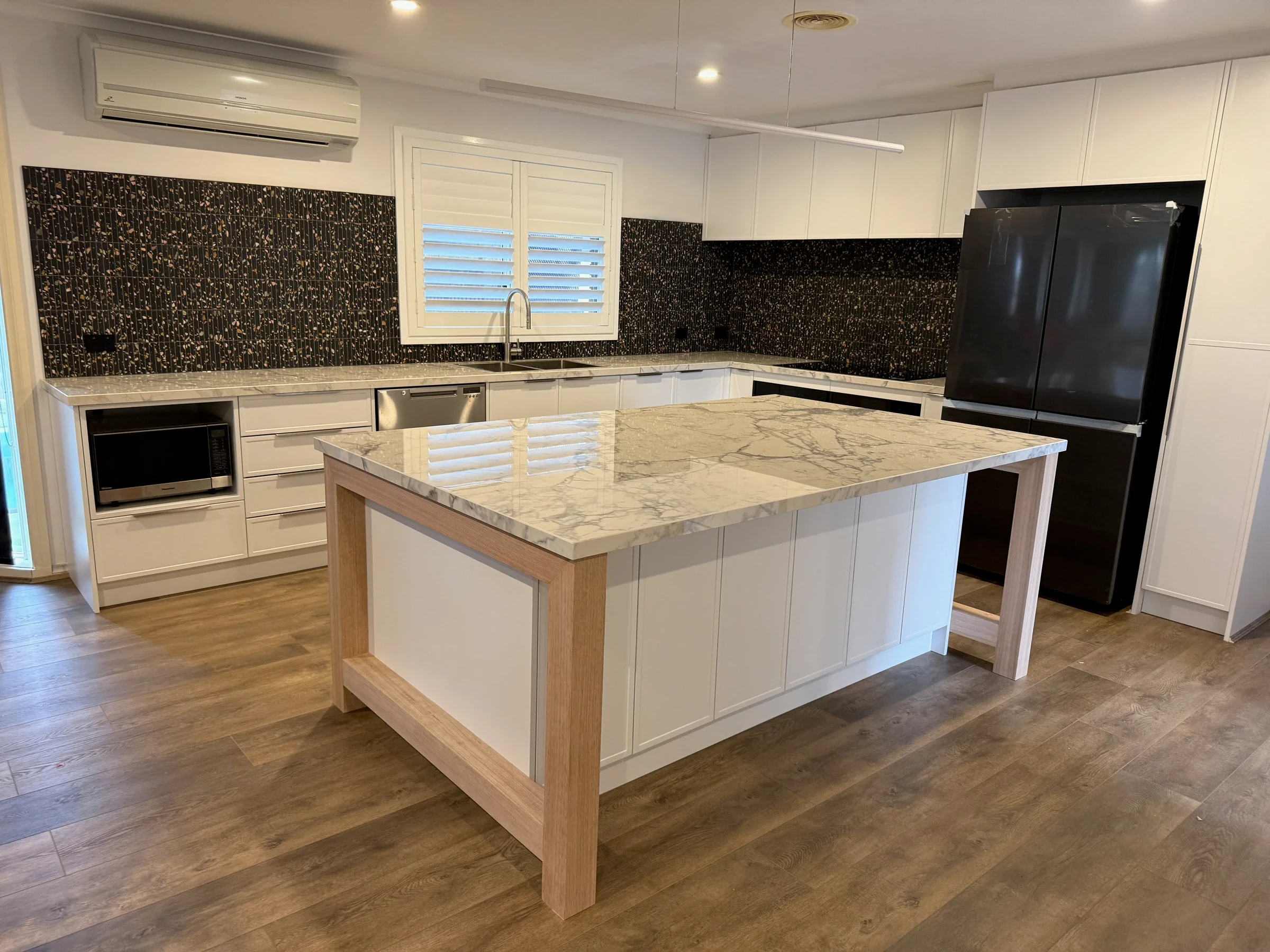
Kitchen renovation only: usually possible, with preparation
You may be able to stay if the rest of the home remains usable and the kitchen can be isolated.
However, you need a realistic temporary setup because the kitchen may be unavailable for several weeks—not merely while the cabinets are being installed.
You will need to account for:
Food storage
Drinking water
Washing dishes
Basic food preparation
Temporary cooking appliances
Dust entering adjoining areas
Appliance and cabinetry deliveries
Plumbing and electrical interruptions
Trade access through the home
A temporary kitchen does not recreate a functioning kitchen. It simply makes the period more manageable.
Bathroom renovation: only if another bathroom remains operational
Staying is generally practical when another complete bathroom remains available.
If the renovation involves the only shower or toilet, alternative accommodation is normally the better approach unless a proper temporary facility can be arranged.
A bathroom cannot simply be used between trades. Once demolition begins, waterproofing, tiling, curing, plumbing and fit-off must occur in the correct sequence.
Ensuite or laundry renovation: often manageable
These projects are usually easier to isolate, provided they do not affect essential services elsewhere in the house.
The difficulty increases when:
The laundry contains the home’s only secondary sink
The project requires access through bedrooms
Flooring continues into surrounding rooms
The electrical or plumbing work affects the entire property
The ensuite is directly beside an occupied bedroom
Kitchen plus flooring, lighting and painting: considerably harder
This is where homeowners often underestimate the disruption.
The cabinetry may be limited to one room, but flooring, plastering, painting and electrical work can spread the building zone across the home.
Furniture may need to be relocated, walkways restricted and adjoining spaces emptied. Even if sleeping areas remain available, normal daily use of the property may become impractical.
Multiple wet areas or a broader renovation: moving out is usually better
Renovating a kitchen, bathroom and laundry at the same time can remove most of the home’s essential facilities.
Staying may also interfere with:
Trade sequencing
Site access
Dust containment
Material storage
Floor protection
Working hours
Security and daily cleaning
In these circumstances, moving out can allow the work to proceed more efficiently.
Structural work or asbestos removal: plan to leave the affected area
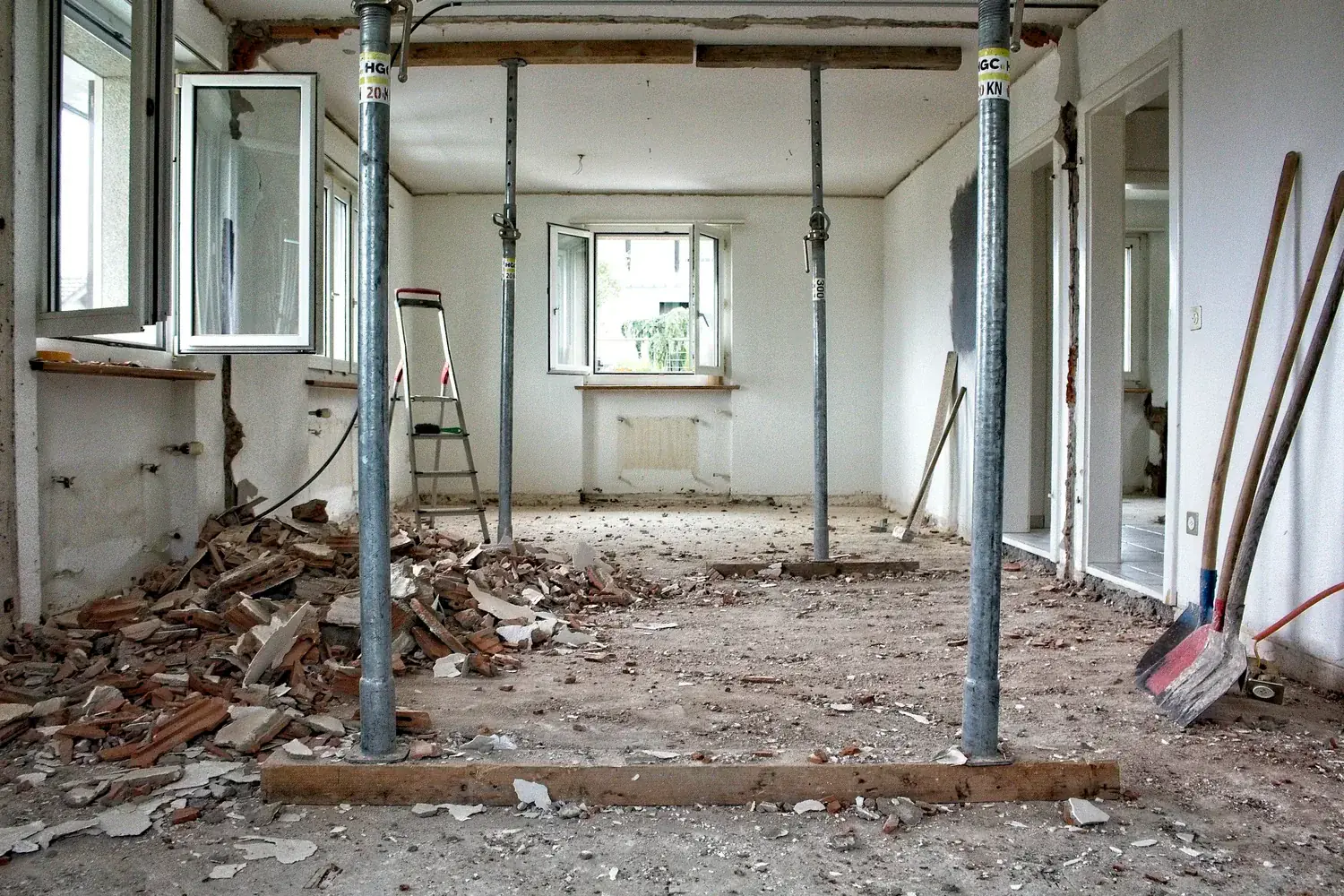
Wall removal, major demolition and structural alterations introduce greater noise, dust, access restrictions and safety controls.
Homes built before 1990 are also likely to contain some asbestos-containing materials. These can be found in wet-area sheeting, vinyl flooring, eaves, electrical components and other locations.
Suspected materials should be assessed before they are disturbed. During asbestos removal, follow the licensed removalist’s directions regarding access and when it is safe to re-enter. Asbestos Victoria provides guidance for homeowners renovating pre-1990 properties.
What Living Through a Renovation Is Actually Like
Even a properly managed renovation remains a building site.
Noise begins early
EPA Victoria advises normal working hours for residential construction and demolition of 7am–6pm on weekdays and 9am–1pm on Saturdays, although council requirements and individual projects can differ. See EPA Victoria’s current construction-noise guidance.
If you work from home, phone calls and concentrated work may be difficult during demolition, cutting, drilling and installation.
Dust cannot be eliminated completely
Barriers, sealed work zones, extraction and floor protection can substantially reduce dust migration.
They cannot turn active demolition into a dust-free process.
Doors will open, trades will move through the property and materials will be carried in and out. Fine dust can still reach areas beyond the immediate building zone.
Trades require access
Living in the home does not mean the site can operate around your normal routine.
Trades may need access to:
The switchboard
The water meter
Ceiling spaces
Subfloors
Side paths
Driveways
Garages
Other rooms containing connected services
You may need to move vehicles, secure pets and keep access routes clear.
Water and power interruptions will occur
Plumbing and electrical work commonly require planned shutdowns.
The contractor should explain:
Which services will be interrupted
Which parts of the home will be affected
Approximately when shutdowns will occur
Whether services will be restored at the end of each day
Whether any appliance or room will remain unavailable overnight
Occasional unplanned interruptions can also occur when concealed conditions are discovered.
The house will not feel private
There may be trades, deliveries, inspections and site discussions occurring throughout the working day.
If someone is unwell, works nights, has a newborn or needs privacy during the day, remaining at home can become far more difficult than expected.
The Five Tests to Apply Before Deciding
1. The essential-services test
Confirm that you will retain:
A functioning toilet
A functioning shower
Safe drinking water
Refrigeration
Sufficient power
A practical way to prepare food
Safe entry and exit
If several of these will be unavailable simultaneously, move out.
2. The separation test
The occupied area should be capable of being physically separated from the work.
An open-plan kitchen in the centre of the home is harder to isolate than an ensuite at the end of a hallway.
Consider:
Doors between the work and living areas
Trade access routes
Ventilation
Shared heating and cooling
Flooring continuity
Material-storage locations
Whether occupants need to walk through the work zone
Nobody should be passing through an active building area simply to access a bedroom or bathroom.
3. The household test
Remaining at home is more difficult when the household includes:
Babies or young children
Elderly family members
People with respiratory conditions
Pets likely to escape or enter the work zone
Anyone working or studying from home
Shift workers sleeping during construction hours
The decision should be based on the least adaptable household member—not the person most confident they can tolerate it.
4. The sequencing test
Ask the builder to explain which facilities will remain operational during every major stage:
Demolition
Rough-in
Wall and floor preparation
Cabinetry installation
Benchtop templating and installation
Tiling or splashback work
Painting
Final electrical and plumbing fit-off
Flooring installation
If the answer is simply “we’ll work it out as we go,” the project is not ready to begin.
5. The cost-and-time test
Remaining at home can save accommodation costs, but it does not always save money overall.
Extra protection, daily cleaning, restricted access and staging can increase labour or extend the program.
Moving out may allow:
More areas to be opened simultaneously
Faster trade access
Easier material handling
Flooring and painting to continue uninterrupted
Fewer daily setup and pack-down requirements
The correct comparison is not only accommodation cost. It is accommodation cost versus the effect staying may have on the project.
How to Create a Temporary Kitchen
If you are remaining at home during a kitchen renovation, establish the temporary kitchen before demolition.
A practical setup may include:
Refrigerator
Microwave
Kettle
Toaster
Portable induction unit
Air fryer
Basic crockery and cutlery
Sealed food-storage containers
Folding preparation table
Nearby water access
Place it outside the work zone and avoid overloading one electrical circuit with several high-draw appliances.
Decide how dishes will be washed. A laundry trough can work if that room is unaffected and hygienic food preparation can be kept separate.
Do not assume the new sink, oven or dishwasher can be used immediately after installation. They may still require benchtops, service connections, testing or final fit-off.
How to Make Staying More Manageable
Remove more belongings than you think necessary
Empty the renovation area and nearby cabinets before work begins.
Move furniture, artwork, electronics and soft furnishings away from access routes and dust-prone areas.
Establish one clean zone
Maintain at least one room that remains closed, clean and free from tools, materials and renovation decisions.
Agree on access and communication
Confirm:
Normal site hours
Who will hold keys
How daily updates will be provided
Where deliveries will be placed
Which bathroom trades may use
Where tools and materials will be stored
How pets and children will be kept away
Plan the difficult stages in advance
You may not need alternative accommodation for the complete renovation.
It may be enough to leave during:
Demolition
Asbestos removal
Structural work
Floor sanding or coating
Major painting
Periods without the only bathroom
Several consecutive days of service shutdowns
This can provide a sensible middle ground.
Questions to Ask Your Builder Before You Decide
Ask for clear answers to these questions:
Which rooms will be unavailable?
How will the construction area be isolated?
Which bathroom, toilet and sink will remain operational?
When will water or electricity be shut off?
Will services be restored at the end of each day?
Where will trades enter and store materials?
Will flooring, painting or plastering extend beyond the main room?
Has the property been assessed for likely asbestos-containing materials?
How will children and pets be protected from the work zone?
Will remaining at home change the construction sequence or duration?
Which stages would be easier if the property were vacant?
What temporary arrangements need to be completed before demolition?
These answers should form part of the project planning—not be left until the first day on site.
Put Occupation Planning Into the Scope
Whether you can remain at home depends on the scope, sequence and services involved in the renovation. The written plan should resolve:
Which parts of the home will be affected
Whether essential facilities can remain operational
Plumbing and electrical interruptions
Trade and material access
Work-zone separation
Temporary kitchen or bathroom requirements
Staging options
Likely disruption points
Whether remaining in the property is realistic
Record the agreed staging, essential-service plan, work-zone separation and temporary facilities before demolition. That gives the builder and household one practical plan to work from.
The Honest Verdict
Stay if the renovation is contained, essential services remain available and the occupied part of the house can be properly separated.
Move out if:
The only kitchen and bathroom will be unavailable
Several rooms are being opened simultaneously
Structural or asbestos work is involved
Children, health needs or working from home make disruption impractical
Remaining would materially slow the project
Just because staying is technically possible does not mean it is the best decision.
Establish the answer before work begins and make it part of the renovation plan.
Related reading
How Much Does a Kitchen Renovation Cost in Melbourne in 2026?