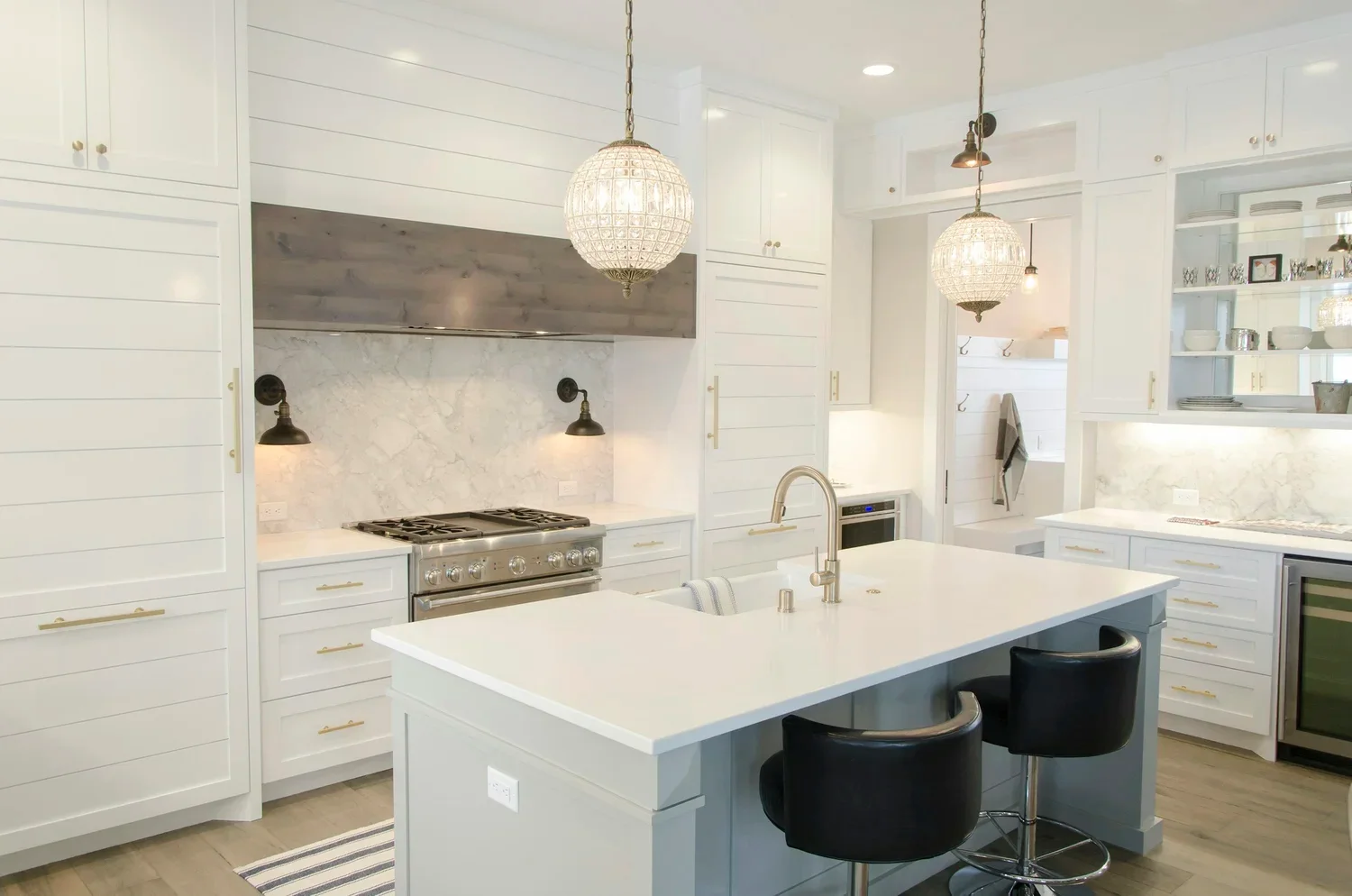
If you are planning a kitchen renovation in Melbourne, one of the first questions will be:
How much is the complete project actually going to cost?
That last word matters.
A $20,000 cabinetry package, a $30,000 kitchen quote and a completed $30,000 kitchen renovation are not necessarily the same thing.
Some quotations cover cabinetry and benchtops. Others include installation. Some include selected appliances. Very few initial showroom estimates account for every trade, repair and finishing item required to deliver a completed kitchen inside an established Melbourne home.
This guide explains the realistic difference between the price of the kitchen products and the cost of completing the entire renovation.
The Quick Answer
Why a Kitchen Quote May Be Much Lower
A showroom or supplier normally prices the products and services it sells.
That can include:
Cabinets
Doors and panels
Handles and internal hardware
Benchtops
A sink or tap
Delivery
Sometimes cabinetry installation
It may not include the work required to prepare the room, connect everything or repair the surrounding home.
We recently reviewed a genuine kitchen estimate totalling $16,897.14.
It included approximately:
$13,718 for cabinetry, doors, panels, hardware and selected tapware
$2,726 for laminate benchtops
$221 for a sink
$230 for delivery
The estimate was not necessarily wrong. It accurately priced the specified products.
But it did not represent a demolished, installed, connected and finished kitchen.
It excluded or left separate:
Existing-kitchen demolition
Waste removal
Cabinetry assembly and installation
Electrical rough-in and final connection
Plumbing rough-in and final connection
Appliances not specifically itemised
Rangehood ducting
Splashback installation
Plastering and painting
Bulkhead alterations
Flooring repairs
Wall repairs
Site cut-outs
Unforeseen building work
Read the complete example: Why a $17K Kitchen Quote Is Not a $17K Renovation
What a Complete Kitchen Budget Needs to Cover
Planning and documentation
Before accurate pricing is possible, the layout, appliances, materials, services and surrounding building work need to be understood.
Otherwise, the quotation is based on assumptions—and every unresolved assumption can later become an additional cost.
Demolition and disposal
Removing the old kitchen can involve:
Disconnecting services
Protecting floors and adjoining rooms
Removing cabinetry, benchtops and appliances
Waste loading and disposal
Stripping wall finishes
Preparing the room for new work
Demolition can also reveal water damage, mould, inadequate framing, old wiring or unfinished flooring.
Cabinetry and internal hardware
Cabinetry pricing is affected by:
Flat-pack versus custom construction
Door material and profile
Cabinet finish
Number of drawers
Pantry systems
Corner mechanisms
Bin systems
Appliance integration
Decorative panels
Bulkheads and fillers
Installation complexity
A simple cabinet with shelves costs far less than a bank of wide drawers, internal pull-outs and integrated appliances.
Benchtops
Benchtop cost depends on more than the colour.
It can be affected by:
Material type
Number and dimensions of slabs
Thickness
Built-up edges
Waterfall ends
Vein positioning
Joins
Sink and cooktop cut-outs
Drainer grooves
Site access
Templating, fabrication and installation
Australia’s engineered-stone prohibition has also changed the available market. Current alternatives include crystalline-silica-free mineral surfaces, porcelain, sintered surfaces, laminate and natural stone. Safe Work Australia explains the prohibition here.
Appliances and ventilation
The appliance budget may need to include:
Oven
Cooktop
Rangehood
Dishwasher
Refrigerator
Microwave
Additional refrigeration
Installation accessories
Rangehood ducting
New electrical circuits
Gas alterations or removal
Appliance selections must be confirmed before cabinetry is manufactured. Approximate dimensions are not enough for custom joinery.
Electrical, plumbing and gas
For many established Melbourne homes, the combined electrical and plumbing work can reach $8,000–$15,000 or more, depending on the scope.
This can include:
Rough-in and final fit-off
New appliance circuits
Power-point relocation
Lighting changes
Switchboard upgrades
Dishwasher services
Sink and tap relocation
Refrigerator plumbing
Gas disconnection or relocation
Rangehood power and ducting
Rectification of existing non-compliant work
Moving the sink, cooktop or major appliances generally increases both cost and complexity.
Building and finishing work
A kitchen renovation rarely finishes neatly at the edge of the cabinetry.
The project may also require:
Plaster repairs
Painting
Bulkheads
Cornice work
Flooring repairs or replacement
Skirting boards
Doorway alterations
Lighting repairs
Wall straightening
Window or door modifications
Making good adjoining rooms
This is one reason a cabinetry quote can look affordable while the complete renovation costs considerably more.
The Decisions That Increase Cost Fastest
Moving the kitchen services
Relocating plumbing, drainage, gas or high-load appliances can require substantial work behind walls, below floors and inside the switchboard.
Structural changes
Removing or altering a wall can introduce engineering, permits, temporary support, structural steel and repairs across the ceiling and flooring.
Overcomplicated cabinetry
Multiple finishes, decorative door profiles, appliance integration, internal pull-outs and excessive custom mechanisms can quickly increase the joinery cost.
Premium appliances
Integrated refrigeration, premium cooking appliances and complex ventilation can affect the appliance, cabinetry and electrical budgets simultaneously.
Extending the project beyond the kitchen
New kitchen flooring often exposes the need to continue into adjoining rooms. The same can happen with painting, lighting, pantry cabinetry and laundry finishes.
Unresolved decisions
Selections made after quoting can create variations, delays and expensive compromises.
The later a major decision is made, the fewer practical options remain.
How to Control the Budget Without Making the Kitchen Feel Cheap
Keep major services close to their existing positions
Moving a sink by a small distance may be reasonable. Moving every service across the room can consume money without necessarily improving the kitchen enough to justify it.
Confirm appliances early
Select actual models before final cabinetry documentation. This reduces last-minute cabinet changes, ventilation problems and electrical surprises.
Spend on the parts you touch every day
Good drawers, hinges, handles and practical storage normally provide more daily value than complicated decorative details.
Choose one statement feature
A strong island, beautiful benchtop or refined cabinetry finish can carry the room. The kitchen does not need every element competing for attention.
Coordinate connected work from the beginning
If the flooring, lighting, laundry or pantry will probably be included, price it as part of the project rather than discovering it halfway through construction.
Keep a contingency
Established homes can contain concealed conditions that cannot be completely confirmed before demolition.
A contingency is not permission to overspend. It protects the project from decisions made under pressure when something unexpected is uncovered.
Questions to Ask Before Accepting a Kitchen Quote
Ask the supplier or builder:
Is this a product-supply quote or a complete renovation price?
Is demolition and waste disposal included?
Are the cabinets assembled and installed?
Does the benchtop price include templating, fabrication, cut-outs and installation?
Are electrical and plumbing rough-in and fit-off included?
Is rangehood ducting included?
Are appliances included, and are the exact models documented?
Is the splashback included?
Are plastering, painting and flooring repairs included?
Who coordinates the trades and project sequence?
What assumptions, exclusions and provisional allowances remain?
What happens if concealed damage or non-compliant services are discovered?
In Victoria, renovation work involving multiple trades and valued above $10,000 generally requires a written major domestic building contract. Domestic building insurance is also required in relevant circumstances above $16,000. Consumer Affairs Victoria provides the current contract guidance here.
Define the Complete Project Before Comparing Prices
Do not compare broad kitchen prices until the complete project is defined. The written scope should record:
The existing room and surrounding home
Layout direction
Cabinetry and storage priorities
Appliances
Plumbing and electrical requirements
Demolition and preparatory work
Connected flooring, lighting and finishes
Likely cost pressure points
The trade and construction sequence
A useful scope shows what is fixed, what remains an allowance, what is excluded and which decisions must be made before ordering or construction.
Budget for the Renovation—Not Only the Cabinets
A lower supply quote is not automatically misleading. It may simply be answering a smaller question:
What will these kitchen products cost?
Before committing, you need the answer to the larger question:
What will it cost to remove the existing kitchen and deliver the complete, working renovation inside my home?
That is the figure worth planning around.
Related guides
The Best Kitchen Showrooms in Melbourne