A laundry can look finished and still perform badly. If heat and moisture cannot escape, the room may feel damp, cabinetry can be harder on appliances, and a vented dryer can push humid air into the house. The time to solve that is before the cabinetry, doors and services are fixed.
This guide explains the practical decisions Melbourne homeowners should make when planning a laundry renovation. It is general guidance: the exact solution should follow the selected appliance instructions and the requirements that apply to your home.
Choose the dryer before finalising the cabinetry
Do not design a generic appliance opening and choose the dryer later. Dryer types manage moisture differently, and that changes the room.
Vented dryers
A vented dryer sends hot, humid air out of the machine. The Australian Government's Energy Rating guidance says these dryers need to be vented outdoors; without that, surrounding walls can become wet. It also notes that the National Construction Code requires a shaft or duct to outside air where vented clothes dryers are installed.
If you are keeping or buying a vented dryer, plan the duct route before cabinetry is manufactured. A short, deliberate route is easier to accommodate than trying to snake a duct through completed cupboards.
Heat-pump and condenser dryers
Heat-pump and condenser dryers collect moisture rather than deliberately exhausting humid air into the room. Some use a removable water container; others can drain condensed water away. They still need the clearances, airflow and service access stated by their manufacturer.
A cabinet door does not erase those requirements. Confirm whether the selected model can be enclosed, how much air space it needs and how it will be removed for servicing.
The room still needs to manage moisture
Even when the dryer does not require an external duct, laundries generate moisture from wet clothes, sinks, drying racks and occasional spills. Melbourne's cooler months can make poor ventilation more obvious because windows are opened less often and damp items take longer to dry.
Victoria's building regulator advises keeping homes well ventilated and using ventilation or mechanical dehumidification to reduce condensation, moisture damage and mould. In a renovation, that means treating ventilation as part of the room design—not as an appliance added at the end.
Depending on the room, the solution may involve an openable window, mechanical exhaust, make-up air and a suitable door arrangement. The right combination depends on the layout and the work being carried out.
Do not create a sealed appliance box
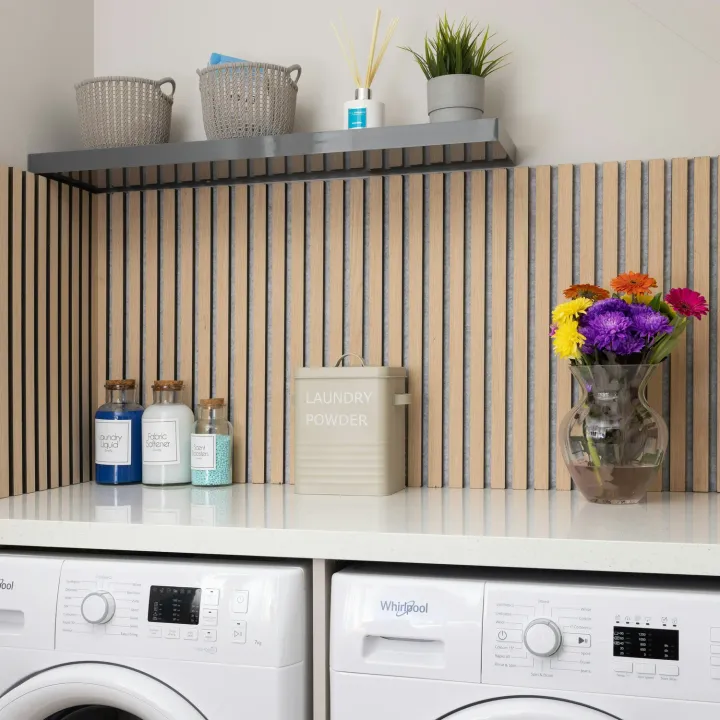
Concealed laundries are useful, but a neat pair of doors can trap heat when the machines are operating. Before choosing bifold, pocket or hinged doors, resolve:
whether the doors will remain open while appliances run
how air enters and leaves the enclosure
the manufacturer's side, rear and top clearances
access to taps, wastes, power points and filters
how the machines can be removed without dismantling cabinetry
A photograph of a tightly fitted laundry is not an installation specification. Appliance instructions and site conditions should drive the clearances.
Plan ventilation, plumbing and power together
Moving a washer, tub or dryer can affect plumbing, drainage, power and ventilation. Resolve these services on one plan before work starts.
In Victoria, certain plumbing work must be completed or supervised by appropriately registered or licensed practitioners. The regulator states that a licensed plumber must issue a compliance certificate for prescribed plumbing work, including when the total value of the plumbing work, materials and appliances exceeds the stated threshold. Ask what certification applies to the actual scope rather than assuming a small room means minor work.
Keep shut-off points and service connections accessible. Hiding everything behind fixed cabinetry may create a clean photograph but an expensive maintenance problem.
Treat wet-area details as construction work
A laundry contains water services and can be affected by leaks, overflows and splashing. Waterproofing and water-resistant construction must be resolved for the particular room and building type.
Victoria's regulator points practitioners to the National Construction Code and the relevant Australian Standards for domestic wet areas. Homeowners do not need to design the membrane system themselves, but they should make sure the scope identifies who is responsible for compliant preparation, installation and inspection before finishes cover the work.
Plan where clothes will actually dry
Many laundries rely on a dryer in winter but still need somewhere for delicates, uniforms and items that cannot be tumble-dried. A ceiling-mounted rack, wall-mounted rail or well-positioned hanging bar can prevent wet clothes being spread through the house.
Do not place a hanging rail so low that shirts rest on the folding bench. Do not place it where wet items block the appliance doors. Check the loaded length of garments, not only the empty rail.
Seven questions to answer before signing off the laundry
Which exact washer and dryer models are being installed?
Does the dryer require a duct to outside?
What clearances and airflow does each manufacturer require?
How will moisture leave the room or cupboard?
Can taps, filters, wastes and power points be reached?
Can both appliances be removed without damaging cabinetry?
Where will wet clothes hang when the dryer is not suitable?
If any of those answers is “we will work it out later”, the design is not ready for manufacture.