A shower niche is useful when it stores real products without weakening the wall or complicating the waterproofing.
It is not essential. A tiled ledge, external shelf or purpose-made caddy can be simpler and easier to change.
Decide early, because a niche affects framing, substrate, waterproofing, tile set-out and plumbing locations.
Start with the bottles
Measure the products the household actually uses. Include pumps, family-sized bottles, soap and any items that must stand upright.
A long low niche can look generous but become cluttered. A small niche can force tall bottles onto the floor. Decide whether one shared shelf, two levels or separate storage positions better suit the users.
Allow enough height to operate pump dispensers without removing them. Do not rely on showroom bottles that are smaller than the products bought at home.
Choose the location from use and splash
Place the niche where it can be reached without standing directly under the shower or twisting awkwardly. Check access for the shortest and tallest regular users.
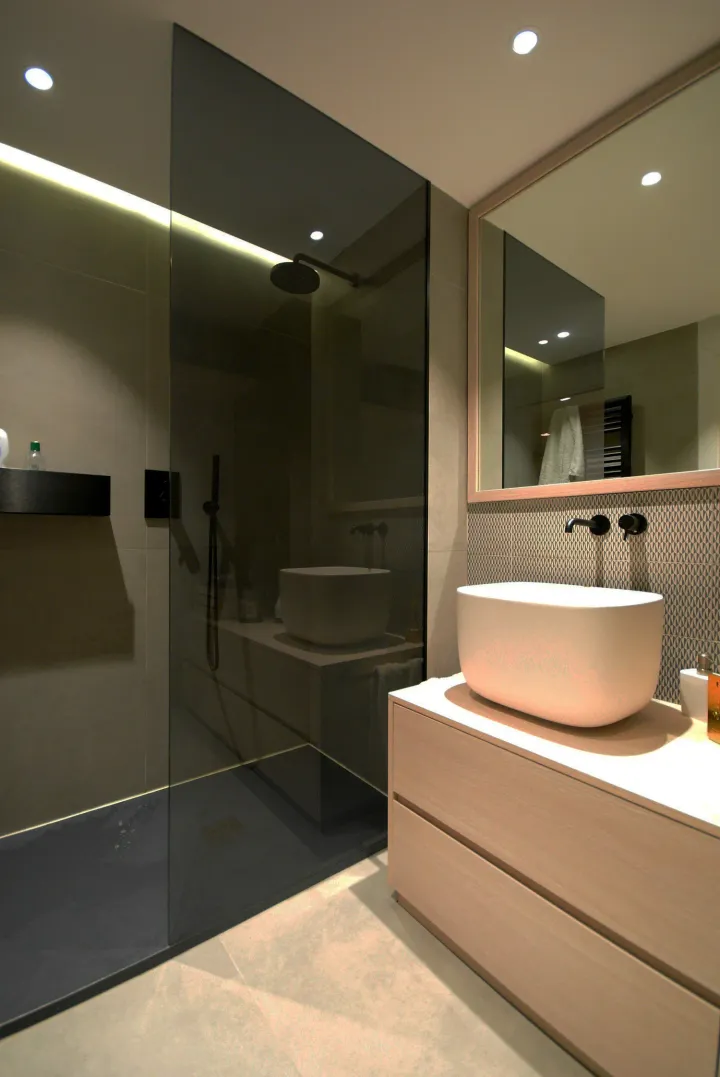
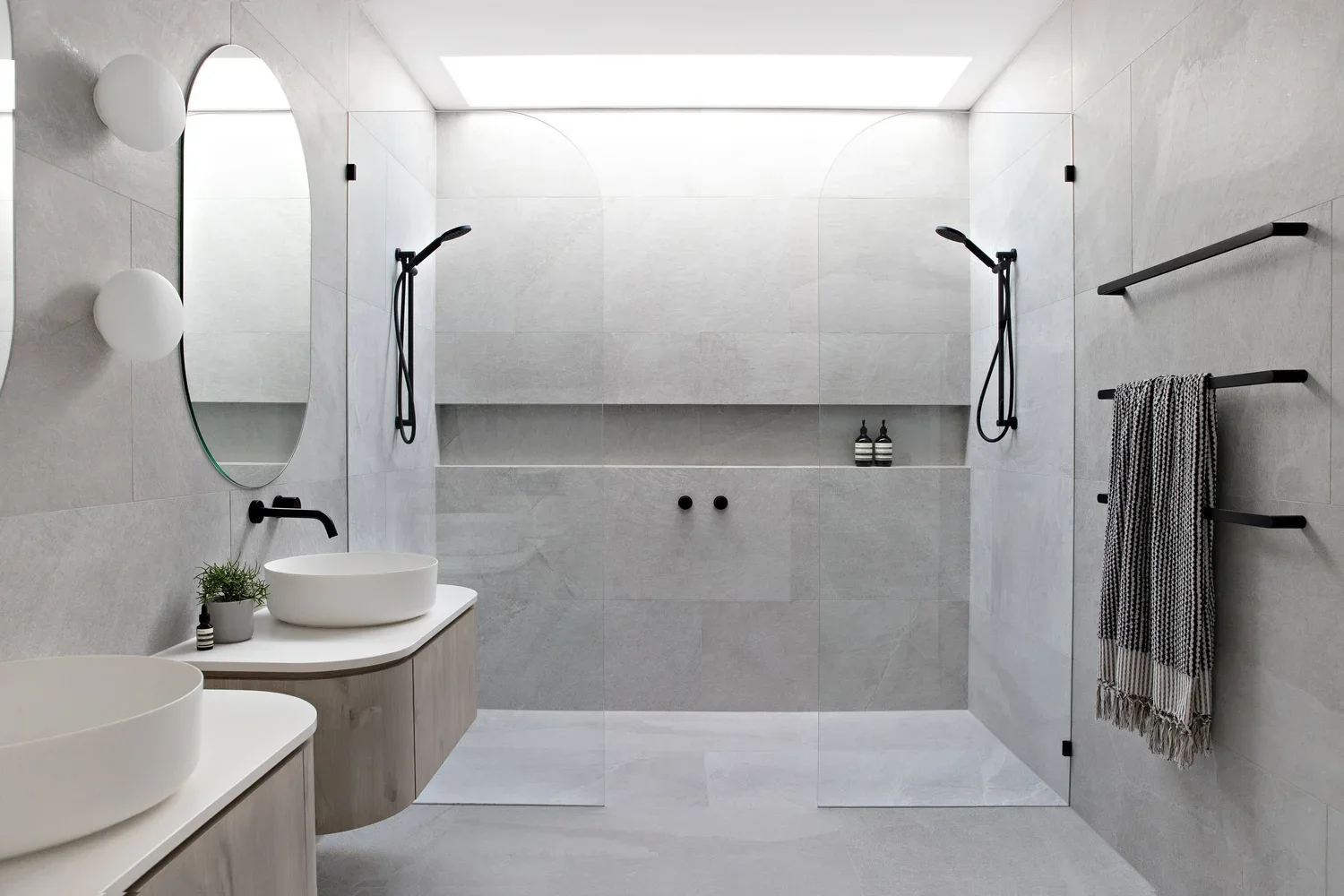
A position on the wall facing the shower can receive more direct water and keep bottles visible from the doorway. A side wall may be less exposed and visually quieter. The best location depends on spray direction, screen, tap position and wall construction.
Avoid placing the niche where a future grab rail, shower fitting or screen fixing may need the same structure.
Inspect the wall before promising a recess
A niche needs physical depth. The wall may contain studs, bracing, pipes, electrical cables or insulation, and an external wall may have thermal and moisture implications.
Do not cut framing or shift services casually. Show the niche on the framing and plumbing drawings. If the preferred wall is unsuitable, compare a false wall, a ledge formed by the plumbing cavity or an external shelf.
A ledge across the back of a shower can create storage without multiple recessed corners, but it also changes the shower footprint and tile set-out.
Waterproofing is the critical detail
The National Construction Code wet-area provisions specifically include recessed soap holders and niches among shower-area penetrations that must be waterproofed.
The system must coordinate:
substrate and any proprietary niche former
internal and external corners
junction with the wall membrane
falls to drain water out
tile adhesive, grout and sealant
any fixings for shelves or trims
A tiled surface and grout are not the waterproofing. The membrane and junctions behind them are what protect the wall.
Make water leave the shelf
The niche base should not hold water. Its finished fall must drain towards the shower, while the tile edge remains comfortable and the opening stays visually level.
Check the fall after substrate, membrane, adhesive and tile thicknesses are accounted for. A nominal slope in framing can disappear during finishing if the detail is not coordinated.
Avoid deep grout channels that trap residue around bottles.
Design the niche with the tile set-out
Decide whether the niche aligns with full tiles, grout lines or another architectural reference. Forcing an opening to a standard dimension can create thin tile cuts around it.
Large-format tiles may reduce the number of joints but make returns and corners harder to fabricate. Mosaic tile can accommodate small surfaces but creates more grout. Stone shelves need appropriate support, edge finishing and sealing where required.
Prioritise waterproofing and useful dimensions over perfect alignment with one promotional elevation.
Cleaning and maintenance
Bottles, soap and water leave residue. A niche adds corners and a horizontal surface that need cleaning.
Use smooth, compatible materials and accessible shelf heights. Dark grout can still show mineral deposits; light grout can show product staining. Follow the selected product care instructions rather than assuming an aggressive cleaner is safe.
Good bathroom exhaust helps the room dry, but it does not remove standing water from a poorly drained niche.
Alternatives worth comparing
Tiled ledge: continuous storage with fewer recessed corners, but it uses shower depth.
Fixed shelf: can be positioned after tile planning, but fixings and penetrations must be detailed.
Purpose-made caddy: replaceable and flexible, though visually more prominent.
Storage outside the spray zone: suitable for towels and less frequently used products.
Niche checklist
What exact products must fit?
Can all regular users reach it safely?
Is the wall free of conflicting structure and services?
Is the waterproofing system documented through every corner?
Does the base drain into the shower?
Does the tile set-out avoid weak cuts?
Would a ledge or shelf be simpler?
Where Bluestone fits
Bluestone coordinates the niche with framing, plumbing, membrane, tiles and shower fittings before construction begins.
See Bluestone’s approach to complete bathroom renovations in Melbourne.