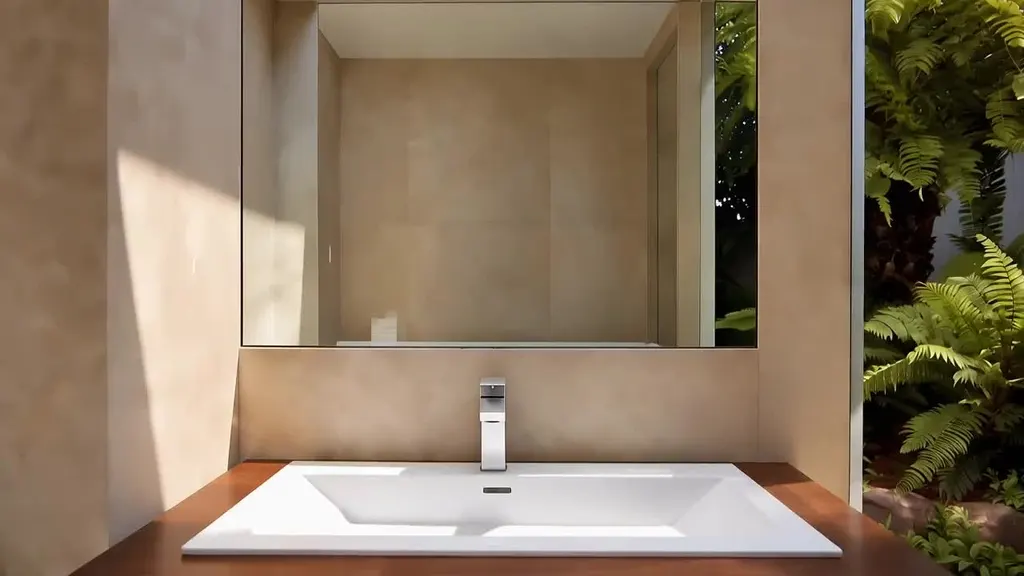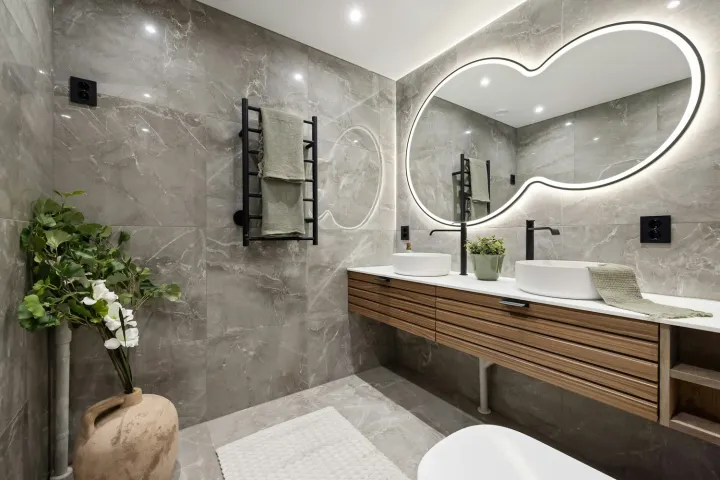
A mirror cabinet is worth it when the storage is reachable and the cabinet is properly integrated with the wall, basin and lighting.
It is not automatically the best answer for every bathroom. A shallow vanity drawer, open shelf or plain mirror may suit the room better.
Test the exact cabinet in section and elevation before deciding.
Start with what it needs to store
List the daily items that currently sit on the vanity. Measure tall bottles, electric toothbrushes, medicines and grooming products.
A mirror cabinet can move small items to eye level and clear the bench. It is less useful for bulky hair tools, towels or large spare products. Those may belong in vanity drawers or tall storage.
Keep medicines and hazardous products secured as appropriate for the household; a high shelf is not the same as a lockable cabinet.
Surface-mounted or recessed?
Surface-mounted cabinet
This attaches in front of the wall. It can avoid cutting a wall cavity, but its depth becomes more visible and the doors may project over the basin.
Draw a side elevation showing the cabinet, tap, basin and user. Check whether someone leaning over the basin feels crowded and whether the lower edge is easy to clean.
Recessed cabinet
This sits partly or fully within the wall and can create a flatter appearance. It is not simply a styling choice. Wall framing, pipes, electrical cables, bracing, insulation and the wall type may limit the recess.
Do not cut framing or move services until the wall has been assessed and the required design is confirmed. A recessed box also needs neat waterproofing or water-resistant junctions where applicable and a finished edge around the opening.
Open every mirrored door
Mirrored doors can collide with side walls, shower screens, tall taps, lights or each other.
Check:
hinge side and maximum opening angle
clearance to adjacent walls and screens
whether an open door blocks the bathroom entry
how the mirror is used when the door is open
whether internal shelves remain accessible
how fingerprints collect at the opening edge
A three-door cabinet can provide useful side views, but narrow leaves and multiple vertical breaks may not suit someone who wants one uninterrupted mirror.
Set height from users and fixtures
Coordinate cabinet height with the basin, tap, splashback, ceiling and users. A standard placement can fail when the tap is tall, the vanity is wall-hung or household heights vary significantly.
Use a full-size paper outline on the wall. Mark the reflective area rather than only the outside cabinet size, because frame and door proportions can reduce it.
Light the face evenly
A ceiling downlight directly above the head can create shadows under the eyes and chin. Side lighting or a well-diffused fitting near the mirror may provide more even light.
Integrated LED cabinets can be useful, but check light quality, replaceability, driver access, switching and warranty. If the light fails, can it be repaired without replacing the entire cabinet?
Australian Government YourHome guidance recommends matching lighting to the task and controlling glare. Test the mirror, polished tiles and fittings together rather than adding the brightest available strip.
Plan internal power carefully
An internal outlet can charge toothbrushes or shavers out of sight. Its location and installation must be coordinated by a licensed electrician with the requirements applying to electrical equipment in bathrooms.
Check that cords do not foul shelves or hinges and that devices can stand upright while charging. Heat-producing tools should not be stored or operated in an enclosed cabinet unless the product and cabinet are designed for it.
Moisture and cleaning
Bathroom mirrors experience steam, splashes and frequent wiping. Ventilation remains the primary moisture strategy; a demister can improve visibility but does not remove humidity from the room.
The NCC condensation provisions address bathroom exhaust and outdoor discharge in the cited application. Select the cabinet’s substrate, mirror backing, edges and hardware for the environment and follow its care instructions.
Check how the cabinet meets tiled walls, how the top collects dust and whether the underside sits within a regular splash zone.
Alternatives to compare
Plain mirror plus vanity drawers: keeps the wall visually lighter and may provide better storage for larger items.
Shallow open shelf: useful for a few daily items but exposes clutter and requires regular cleaning.
Tall cabinet: can store towels and larger products but needs floor or wall space and careful door clearance.
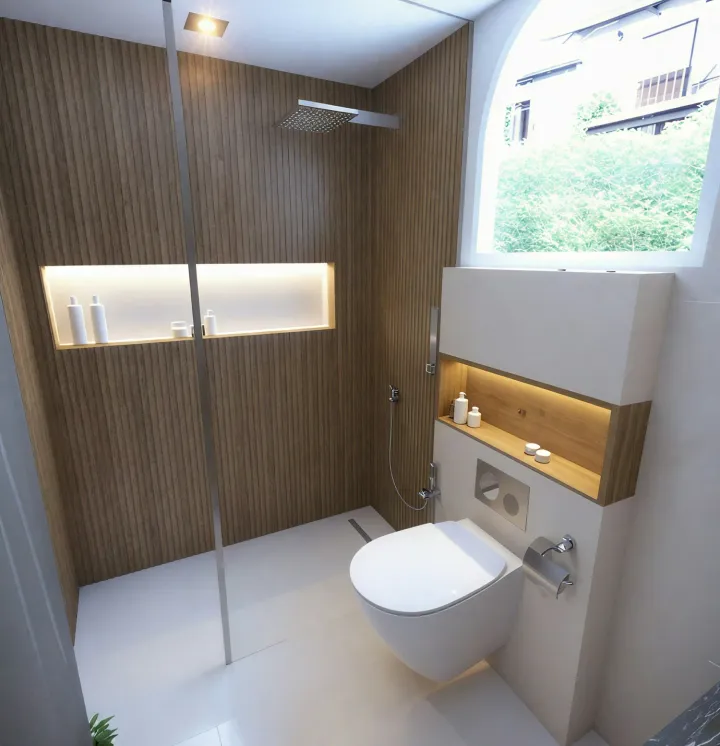
Recessed niche outside the shower: can hold selected items but needs early framing and waterproofing coordination where relevant.
Mirror-cabinet checklist
What exact items must fit?
Can the wall accept a recess without compromising framing or services?
Do doors clear walls, lights, taps and shower screens?
Is the reflective area at the right height?
Does lighting illuminate faces without excessive glare?
Are power, driver and demister components serviceable?
Would vanity drawers and a plain mirror work better?
Where Bluestone fits
Bluestone coordinates the mirror cabinet with framing, services, waterproofing, tiles, vanity, lighting and electrical work before the wall is closed.
See Bluestone’s approach to complete bathroom renovations in Melbourne.